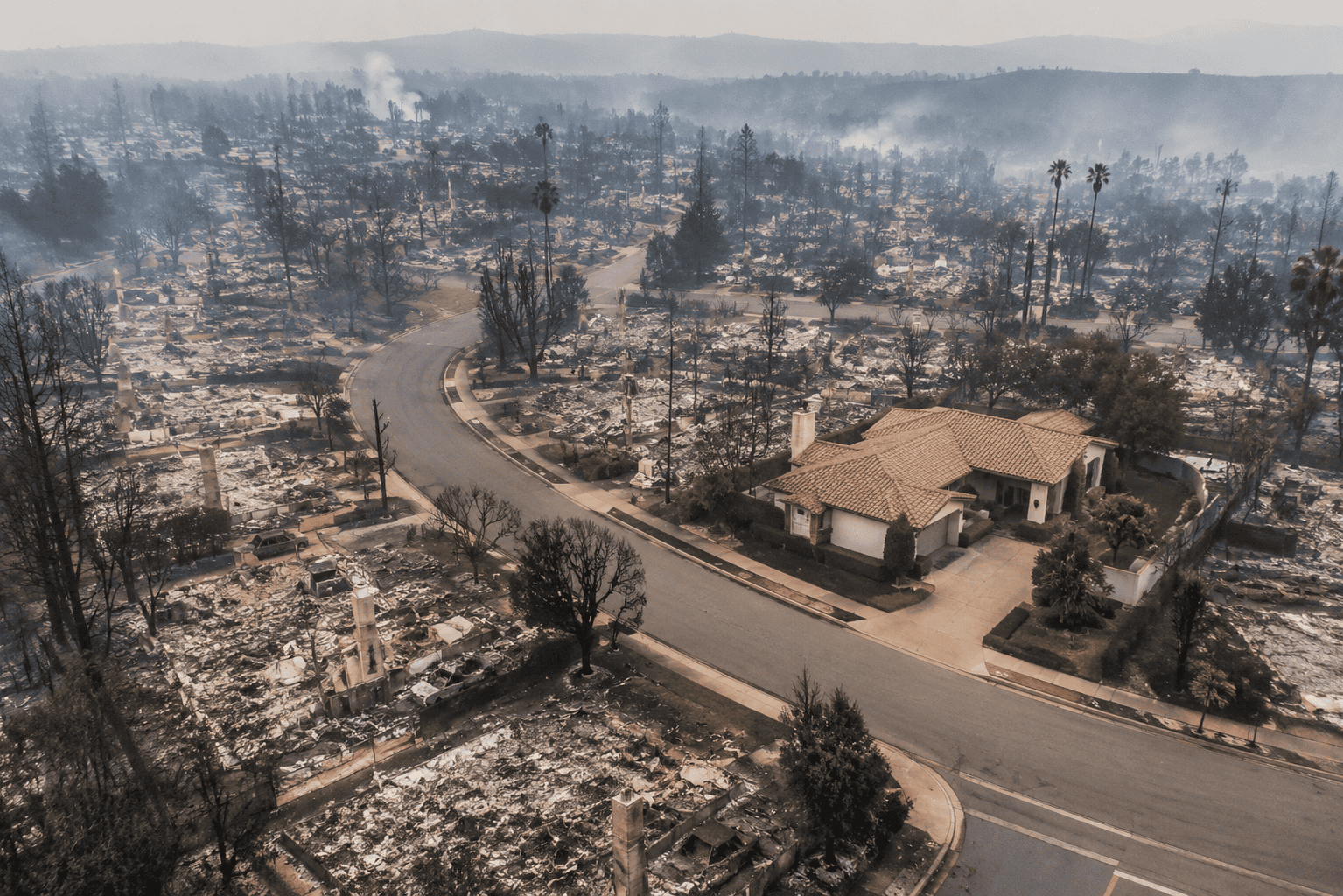
With the number of wildfires we have seen over the last few years, we have been getting more questions about what homeowners can do to make their homes more resistant to fire.
Obviously, there is no such thing as a fireproof home. If a wildfire reaches a house, there are a huge number of factors that determine what happens next. Landscaping, surrounding vegetation, vents, siding, windows, decks and even the cleanliness of your gutters can make a difference.
But the roof is a pretty important place to start.
I have been in the roofing tile business for a long time, and I have heard firefighters say that some of the roofing materials they like to see during a wildfire are metal, concrete and clay.
That makes sense, but I wanted to see if there was actually some research behind it rather than just repeating something I had heard.
It turns out there is.
Why the Roof Matters During a Wildfire
One of the biggest threats to a home during a wildfire isn’t necessarily a wall of flames reaching the house.
It can be the embers.
The U.S. Fire Administration explains that burning embers can travel away from the main fire and land on combustible materials around a building. If they find somewhere to collect and something that will burn, they can ignite a home even when the main fire is some distance away.
The roof obviously presents a pretty large target.
FEMA recommends using a Class A roof assembly in areas exposed to wildfire risk. Class A is the highest fire resistance classification for roofing.
Materials capable of being used in Class A roof systems include clay tile, concrete tile, metal roofing and many modern asphalt roofing products.
So the firefighters weren’t just giving me their personal preference.
Where Clay Roof Tiles Have an Advantage
Clay has one fairly obvious characteristic when it comes to fire.
It doesn’t burn.
Clay roofing tiles are made from natural clay that has been fired at extremely high temperatures in a kiln. You are essentially putting a ceramic material on your roof.
FEMA specifically identifies clay and concrete tile as noncombustible roof coverings that can be incorporated into Class A roof assemblies.
That doesn’t mean putting clay tiles on a house suddenly makes it wildfire proof.
The construction underneath the tile matters. The underlayment matters. The roof deck matters. The details around ridges, hips, valleys and eaves matter.
Installation is especially important with traditional clay tile because you don’t want openings where wind driven embers can get underneath the tile.
FEMA recommends sealing openings at the ends of tile roofs to help prevent debris and embers from accumulating underneath.
That is an important distinction.
It isn’t just about choosing a good roofing material. It is about building a good roofing system.
What About Clay Roof Tiles?
This is where things get particularly interesting to me.
We sell both new and reclaimed clay roofing tiles, and reclaimed tile has something that a new roofing product simply can’t reproduce.
History.
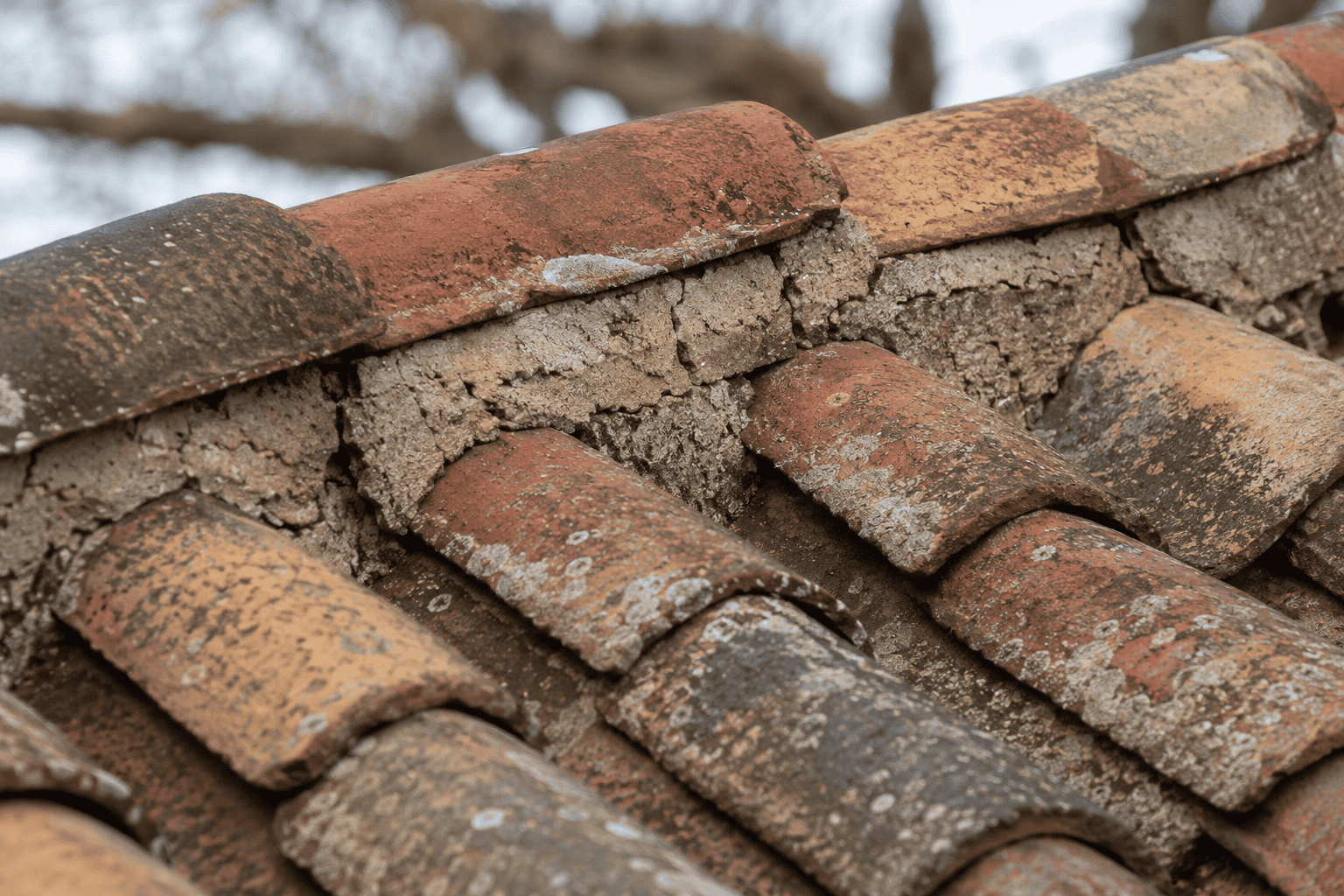
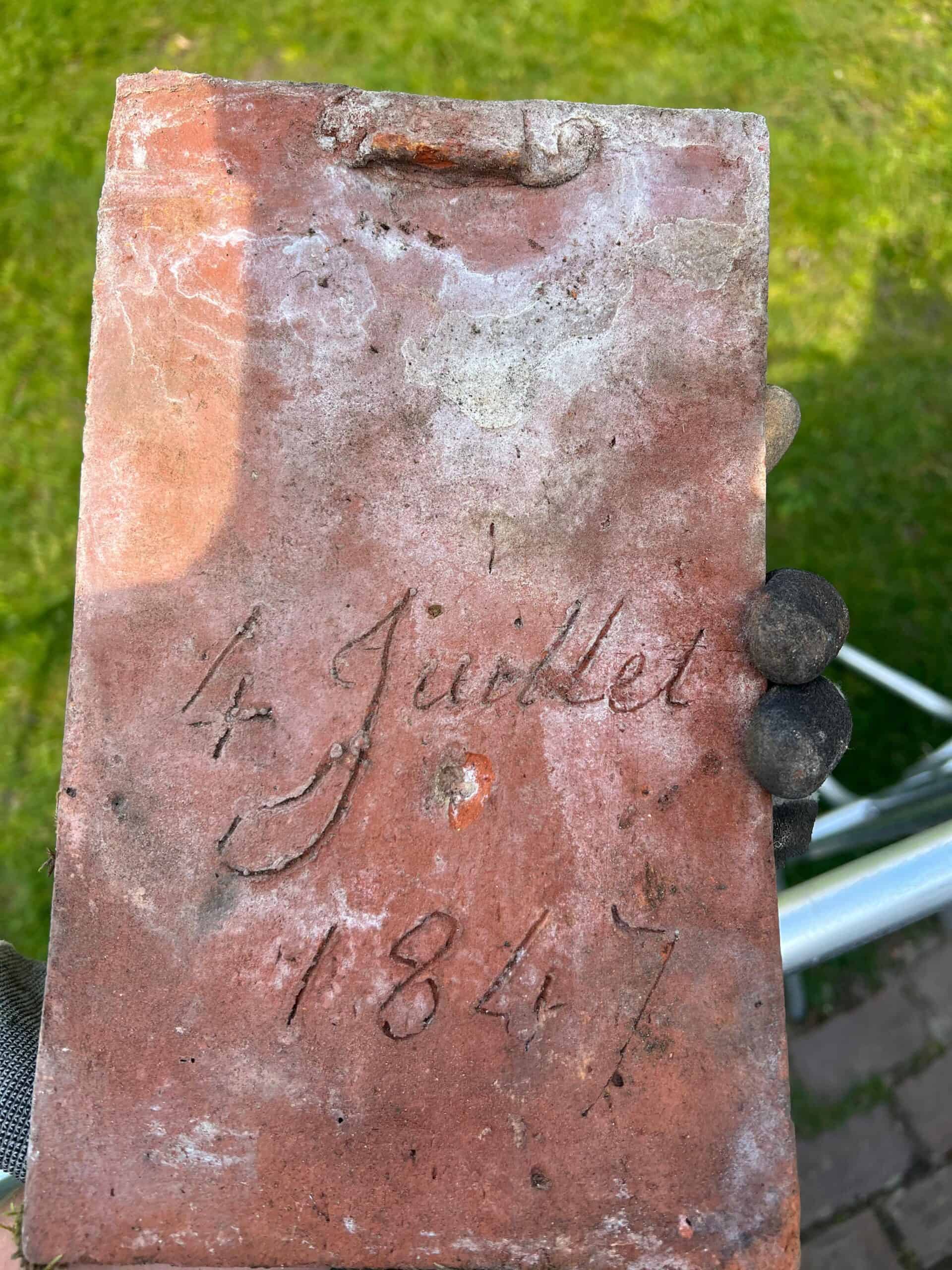
A reclaimed clay tile might have spent the last 80, 100 or even 150 years sitting on a roof somewhere in England or France.
Think about that for a second.
That tile may have been installed before cars were common. It may have survived two World Wars, countless storms and generations of people living underneath it.
Then the building is renovated or the roof is carefully dismantled, the usable tiles are salvaged, sorted and eventually shipped across the Atlantic.
Now they can become part of another building.
I have always thought that was pretty amazing.
You Can’t Manufacture 100 Years of Weather
Manufacturers do an incredible job producing new tiles that recreate traditional European colors and textures. We work with some fantastic manufacturers that make genuinely beautiful products.
But there are certain things you simply can’t manufacture.
A century of rain, frost, sunlight, moss, soot and weather creates variations that are incredibly difficult to duplicate.
One reclaimed tile might be slightly darker than the one beside it. Another might have a little staining. Another might have a surface texture that only appeared after decades of exposure.
Put hundreds or thousands of them together and you get a roof that doesn’t look manufactured.
Because it isn’t.
That is why reclaimed tiles work particularly well on historic renovations, traditional architecture and new homes designed to look as though they have been sitting there for generations.
Fire Resistance Is Only Part of the Picture
If you live in an area with wildfire exposure, choosing an appropriate roof is one part of protecting your home.
CAL FIRE recommends fire resistant roofing materials including metal, clay and tile, but it also recommends keeping roofs clear of leaves and debris and closing openings where embers could get underneath the roofing.
The Insurance Institute for Business & Home Safety makes a similar point. There isn’t one single feature that guarantees a home will survive a wildfire. Multiple mitigation measures work together to reduce the risk.
So I wouldn’t tell anyone that installing a clay roof means they no longer need to worry about wildfire.
I would say that if you are replacing a roof anyway, particularly in an area where wildfires are becoming a concern, the fire performance of the roofing system deserves to be part of the conversation.
And if you happen to love traditional architecture, reclaimed clay tile gives you another benefit that is difficult to put on a specification sheet.
Your roof gets a story.
A Roof Also Needs to Breathe
There is another part of the roof that I don’t think gets talked about nearly as much during wildfires: ventilation.
Normally, ventilation is a very good thing.
A properly designed roof uses vents to move air through the attic or roof space, helping control heat and moisture. Depending on the design, air can enter through soffit or eave vents and leave through vents higher up on the roof.
Unfortunately, during a wildfire those same openings can become a weak point.
Wind doesn’t particularly care which direction we intended the air to travel.
Wind-driven embers can enter through attic, soffit, gable and roof vents. Once an ember gets inside the attic, it can land on insulation, wood framing, stored materials or other combustible surfaces and potentially start a fire inside the house.
That means you could have a perfectly good clay, concrete or metal roof covering and still have a vulnerability if embers can get underneath it or into the attic through an unprotected vent.
There are several ways this can be addressed.
One is using vents specifically designed and tested to resist the entry of flames and embers. Another is using appropriately sized noncombustible metal screening where permitted. There are also purpose-built vents that can be closed when a wildfire threatens and reopened afterwards.
Please check out the Insurance Institute for Business & Home Safety for much more detailing information. They are the real experts on this and have done significant testing.
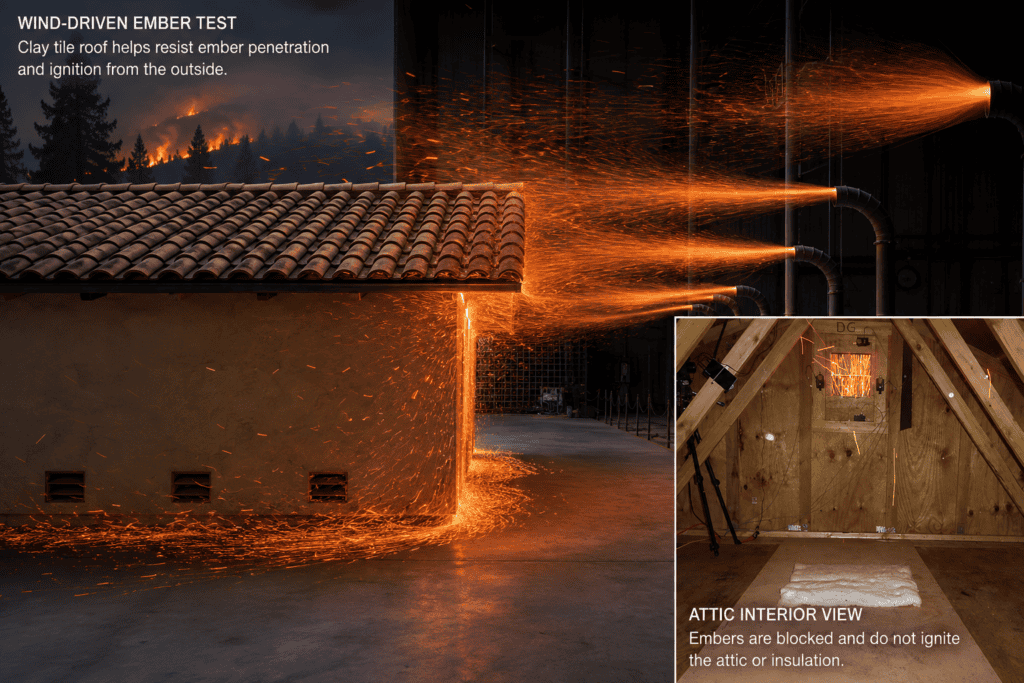
Some newer homes are even designed with unvented attic assemblies, eliminating these exterior ventilation openings altogether. That isn’t something you should simply do to an existing house by covering all the vents, since improper ventilation can create serious moisture problems and may violate local building codes.
The important point is that we should be thinking about the whole roof system.
The tile or metal on top is your first line of defence, but we also need to think about where an ember could get underneath it or inside the building.
Sometimes the smallest opening in the roof can be just as important as the material covering the other 2,000 square feet.
Interested in New or Reclaimed Clay Roof Tiles?
At Northern Roof Tiles, we have been working with new and reclaimed clay roofing tiles from Europe and North America for decades.
Whether you are restoring a 100-year-old building, designing a new home with a traditional European look, looking for a new clay tile, or trying to match a roof that has been there for generations, there are a lot of options available.
Sometimes reclaimed tile is the perfect choice. Other times a new tile will give you the look, performance and availability that makes more sense for the project.
If you aren’t sure where to start, send us a few photos and some basic information about your project. We are always happy to take a look and help narrow down the options.
And if the tile you are looking for isn’t something we carry, we will tell you that too.
Sometimes finding the right roof really does start with something as simple as a photograph.
Please check out these additional resources for information on how to prepare your home and land for wildfires.
There is obviously much more to protecting a home from wildfire than choosing the right roofing material. The design of your home, vents, windows, decks, landscaping and even what is growing or stored immediately around the house can all make a difference. If you live in an area at risk from wildfires, there are some excellent resources available with practical steps you can take to help reduce that risk. FireSmart Canada has extensive information for Canadian homeowners, while CAL FIRE provides excellent guides on home hardening and creating defensible space around your property. Even relatively simple changes around your home and yard can help make your property better prepared when wildfire conditions occur.